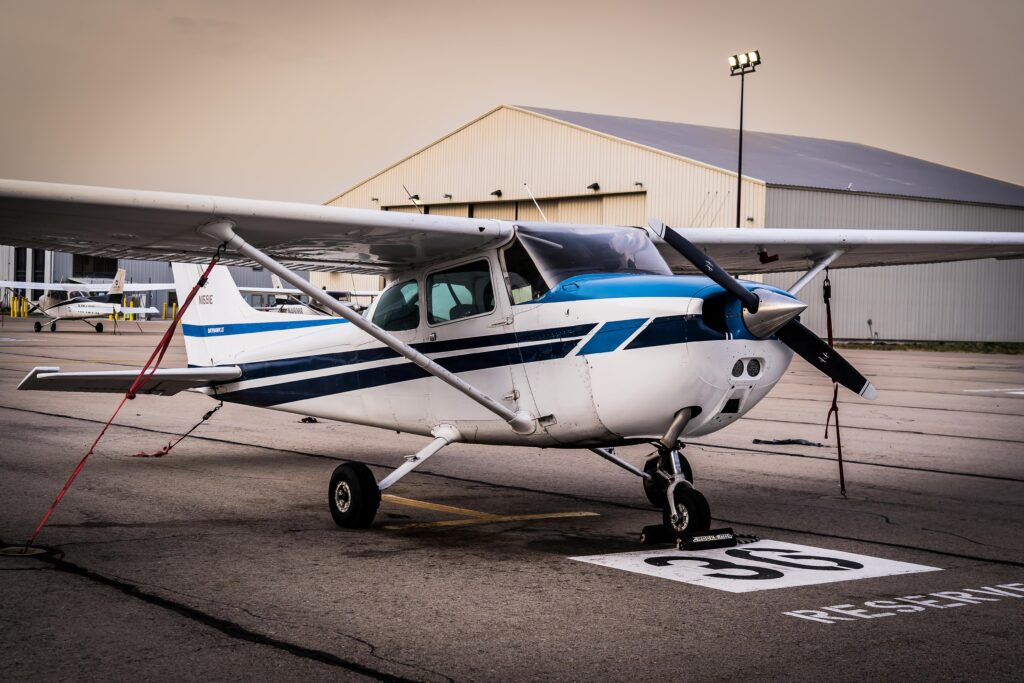
Fly out of Georgetown Municipal Airport in an IFR capable airplane that is maintained to a standard you can trust on a long cross country. Glidepath Aviation keeps the process at KGTU simple, from your first inquiry through checkout and into the left seat.
Here is how the process works, start to finish:
Georgetown, Texas puts renters in an unusually convenient spot. Georgetown Municipal Airport (KGTU) is a towered general aviation field north of Austin with paved runways, on site fuel, and none of the airline traffic that slows down a training flight, which makes it practical for pattern work, instrument approaches, and departures toward the Hill Country or the Gulf Coast without a long taxi or a lengthy wait for release.
Rental requirements are the same ones the FAA already expects you to satisfy, so have them in order before you arrive. You need a certificate appropriate to the aircraft and the flight, a valid medical or BasicMed qualification, a flight review completed within the preceding 24 calendar months, and three takeoffs and landings inside the preceding 90 days in the same category and class if you intend to carry passengers. Instrument flight depends on recent instrument experience or a completed instrument proficiency check, and night or tailwheel operations carry their own requirements. On insurance, confirm your deductible and whether you are expected to carry non owned aircraft coverage, since that question is far cheaper to answer before a claim than after one.
Plan around the airspace and the weather rather than reacting to them. KGTU sits beneath and adjacent to busier airspace, with Austin’s Class C to the south and military restricted areas to the northwest, so review current charts, TFRs, and NOTAMs during every preflight. Summer heat drives density altitude high enough to noticeably lengthen a takeoff roll and flatten your climb, afternoon convective buildups form quickly through the warm months, and spring carries a genuine risk of hail and damaging wind. Treat weight and balance, fuel reserves, and a workable alternate as part of the rental, tie the aircraft down or hangar it when storms are in the forecast, and follow the operator’s instructions for overnight storage away from base.
Rentals operate from Georgetown Municipal Airport, identifier KGTU, north of Austin in Williamson County. The field is towered, has paved runways suitable for light general aviation aircraft, and offers fuel and ramp access on site. Contact Glidepath Aviation for the specific ramp or hangar location and for gate or access instructions before your first reservation, since those details vary by tenant and are easier to sort out ahead of your arrival than on the morning of a flight.
The featured airframe is a 1978 Cessna 172N, tail number N1591E, upgraded well beyond a stock airplane of that vintage. It carries a Garmin 530 WAAS navigator that is fully IFR rated, a TKM MX385, a Garmin GX327 transponder, Freeflight ADS-B out, and a Sentry ADS-B unit for use with ForeFlight. Cabin upgrades include USB charging ports and LED landing and taxi lights, and a Power Flow exhaust improves both climb and cruise performance.
Rental is priced dry, which means fuel is billed separately from the hourly rate rather than bundled into it. Hourly rental for a 172N in this configuration runs from roughly $120 per hour. Pilots who buy block hours in advance see the effective rate drop as the block size grows, from around $114 per hour at 25 hours down toward $85 per hour on the largest commitments. Confirm current rates with Glidepath Aviation before budgeting a training program.
Yes. A checkout with a certificated flight instructor is required before you take the aircraft on your own. The purpose is practical rather than bureaucratic. The instructor confirms you are comfortable with the Garmin 530 and the rest of the panel, familiar with how this particular airframe handles with the Power Flow exhaust and its power settings, and briefed on local procedures at KGTU. Budget an hour or two of dual and bring your logbook and documents.
Yes. N1591E is IFR certified and the Garmin 530 WAAS installation is fully IFR rated, which supports approach work and real instrument flying rather than just VFR navigation. You still need instrument privileges plus recent instrument experience or a completed instrument proficiency check to act as pilot in command under IFR. The towered environment at KGTU and the approaches available in the surrounding area make it a reasonable base for building instrument proficiency.
It suits time building well. A 172N is economical to operate, forgiving, and widely enough flown that the hours transfer cleanly toward a commercial certificate or an airline application. The dry rate keeps your cost per hour predictable, and block hour purchases lower it further, which matters when you are logging hundreds of hours rather than dozens. Pilots on an aggressive timeline should discuss scheduling priority up front so aircraft availability does not become the bottleneck.
Yes. Longer reservations typically carry a daily minimum number of flight hours so the airplane is not sitting unused on a distant ramp, and you are responsible for proper tie down or hangar arrangements at each stop. Talk through your route, fuel stops, and weather contingencies with Glidepath Aviation beforehand. Pilots who make trips like this regularly often find that a lease arrangement costs less over a year than a series of multi day rentals.
Two things stand out. First, the airspace is layered, with Austin’s Class C nearby to the south and military restricted areas to the northwest, so brief the chart carefully and check NOTAMs and TFRs before you go. Second, Central Texas heat is a real performance factor. Density altitude on a summer afternoon will lengthen your takeoff roll and reduce your climb rate more than the numbers suggest, so run actual performance calculations rather than relying on habit.