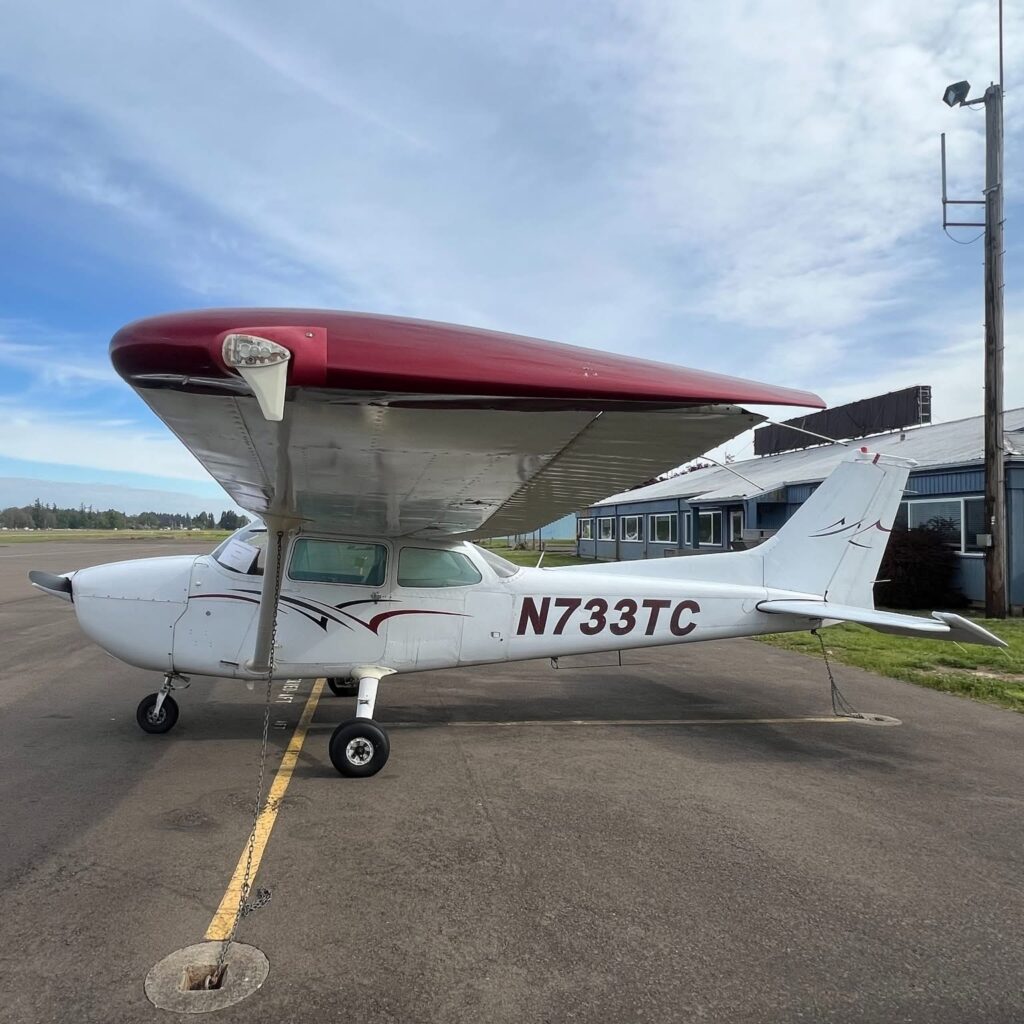
Take the Cessna 172N 180HP – N733TC out of St. George and get the extra climb performance that genuinely earns its keep in desert heat and rising terrain. Glidepath Aviation makes aircraft rental at KSGU practical for student pilots, private pilots staying proficient, and time builders working toward a commercial certificate. Pilots who do not need the horsepower upgrade can book the standard Cessna 172N – N804BL and keep their hourly cost lower for local flying and pattern work. Compare the full Utah aircraft rental lineup to weigh airframes, avionics, hourly rates, and lease terms before you lock in a date. Every reservation begins with a CFI checkout and is supported by a team that treats safety, maintenance, and pilot support as the starting point.
Reserve a well maintained airplane in St. George and you are a short flight from some of the most photographed country in North America. Glidepath Aviation keeps the process at KSGU simple, from confirming your currency through checkout and into the left seat.
Here is how the process works, start to finish:
St. George, Utah is arguably the best positioned field in the state for scenic flying. St. George Regional Airport (KSGU) sits on a mesa at roughly 2,900 feet, the lowest field elevation Glidepath Aviation operates from in Utah, with a long runway, commercial airline service alongside general aviation, and Zion National Park, the Pine Valley Mountains, Lake Powell, Lake Mead, and the Arizona Strip all within comfortable reach. Check the chart supplement for current tower hours and expect controlled field procedures when the tower is open.
Rental requirements follow what the FAA already asks of you, so arrive with your paperwork current. Bring a certificate appropriate to the aircraft and the flight, a valid medical or BasicMed qualification, a flight review completed within the preceding 24 calendar months, and three takeoffs and landings inside the preceding 90 days in the same category and class if you plan to carry passengers. Instrument flight requires instrument privileges plus recent instrument experience or a completed instrument proficiency check, and equipment varies by tail number so confirm the panel on the specific airplane you reserve. Every aircraft requires a CFI checkout regardless of your total time, and you should settle renter insurance and your deductible before you fly rather than after a claim.
Heat is the operational story here rather than field elevation alone. St. George is among the hottest places in Utah, and a summer afternoon well above 100 degrees can push density altitude past 6,500 feet even from a field under 3,000 feet, which lengthens the takeoff roll and cuts climb rate at exactly the moment you want performance for terrain to the north and east. Run real performance calculations for actual temperature and weight, plan departures for early morning through the summer months, and carry water and sun protection since a diversion in this country can leave you waiting in genuine desert conditions. Airspace deserves specific attention too. National park overflight advisories apply near Zion, the Grand Canyon Special Flight Rules Area lies to the south and carries mandatory requirements you must understand before crossing into it, and military activity operates in parts of the region, so review current charts, TFRs, and NOTAMs on every preflight. Blowing dust, afternoon thermals, and mechanical turbulence near terrain all belong in your brief, and mesa top winds can differ noticeably from the valley below.