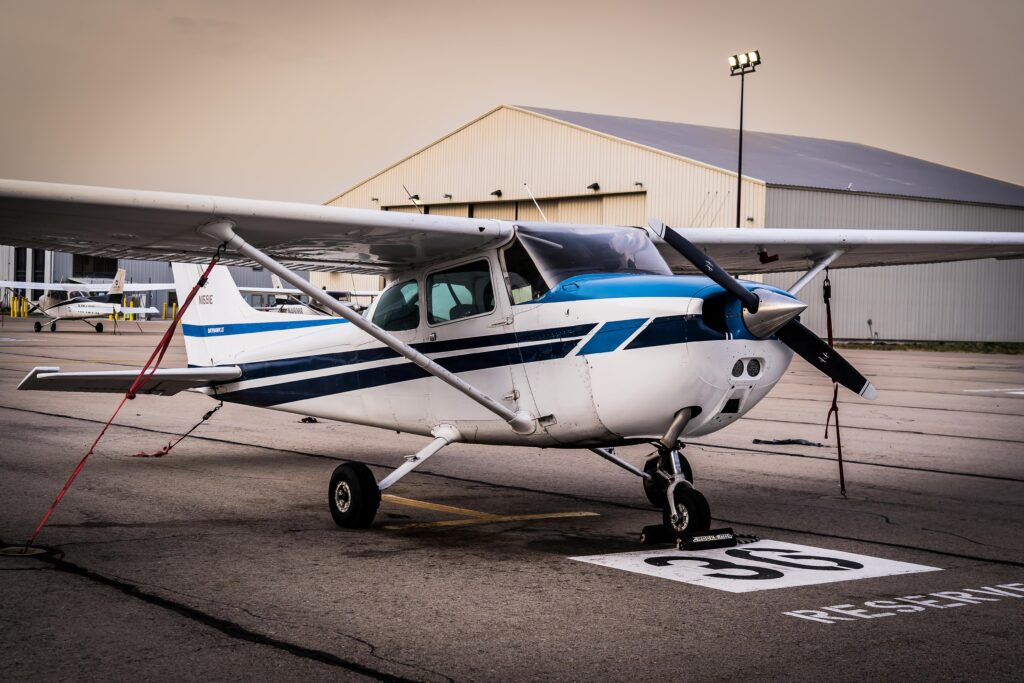
Reserve the Cessna 172N – N1591E and get a high wing with a Power Flow exhaust for improved climb and cruise, plus USB charging ports, an engine pre-heater, and LED landing and taxi lights. Glidepath Aviation keeps high wing airframes available across Texas and Utah for student pilots, private pilots staying current, sightseeing flights, and time builders working toward a commercial certificate. Pilots who want modern glass in the same configuration can compare the Cessna 172N – N804BL, which pairs a 180HP Penn Yan engine with a Garmin GTN 650xi and dual G5s. Browse the wider airplane rental fleet if you want to weigh high wing visibility against a low wing platform before you book. Every airframe requires a checkout with a CFI and is supported by a team that treats safety, maintenance, and pilot support as the baseline.
Choose a high wing and you buy yourself a better view of the ground, shade on a hot ramp, and an easier time loading passengers and gear. Glidepath Aviation keeps high wing Cessnas available on hourly and lease terms at fields across Texas and Utah.
Here is how the process works, start to finish:
High wing airplanes earn their reputation honestly, and the advantages are practical rather than theoretical. You get unobstructed downward visibility, which matters when you are following a river or a valley, sizing up an unfamiliar strip, or simply showing someone the country below. You get shade on the ramp during preflight, which is no small thing in a Texas summer or a St. George afternoon. Loading passengers and gear is easier without stepping over a wing, and ground clearance is better on rough or unimproved surfaces. The tradeoffs are real too. The wing sits between you and the sky in a turn, checking fuel visually usually means a ladder or a step, and inspecting upper wing surfaces takes more effort. Glidepath Aviation runs Cessna 172 variants in this category, which means parts availability, well understood maintenance, and deep instructor familiarity all work in your favor.
Rental requirements follow what the FAA already asks of you, so arrive with your paperwork current. Bring a certificate appropriate to the aircraft and the flight, a valid medical or BasicMed qualification, a flight review completed within the preceding 24 calendar months, and three takeoffs and landings inside the preceding 90 days in the same category and class if you intend to carry passengers. Instrument flight requires instrument privileges plus recent instrument experience or a completed instrument proficiency check, and certification varies by tail number so confirm the panel on the specific airplane you reserve. Every airframe requires a checkout with a certificated flight instructor regardless of your total time, and with engine conversions and glass panels across this line that requirement is doing genuine work rather than covering paperwork. Settle renter insurance and your deductible before you fly rather than after a claim.
Two habits matter more than any equipment choice. The first is running real performance numbers for the actual temperature, weight, and field elevation rather than trusting what the airplane did last time, because density altitude changes takeoff distance and climb rate more than most pilots expect. That is particularly true at the Utah fields, where elevations sit thousands of feet above sea level and terrain rises quickly on multiple sides, and it applies on hot Texas afternoons as well. The second is treating weather as a decision rather than a formality, which means checking current observations and forecasts, reviewing charts, TFRs, and NOTAMs on every preflight, carrying honest fuel reserves, and briefing an alternate you would actually be willing to use. Beyond that, understand the daily minimum hours attached to multi day reservations, arrange proper tie down or hangar space at each overnight stop, and follow the operator’s instructions for storing the airplane away from base.
The high wing line is built around Cessna 172 variants. Options include a 1978 172N with a Power Flow exhaust, USB charging, an engine pre-heater, and LED lighting, a 1976 172N with dual G5s and a GNX 375 touchscreen GPS, a 1986 172P with a 180 horsepower Lycoming, another 172N running a Penn Yan 180HP engine with a Garmin GTN 650xi, and a 172N converted to 180 horsepower. Availability varies by field across Texas and Utah and by date.
Visibility downward is the big one, and it matters for sightseeing, following terrain, spotting traffic below you, and evaluating an unfamiliar field before you commit to it. Beyond that you get shade during preflight and while loading, easier cabin access without climbing over a wing, and better ground clearance on rough surfaces. For scenic flying and for training in mountainous or unfamiliar country, most pilots find the high wing the more useful tool.
Three worth knowing. The wing blocks part of your view upward and into a turn, which is a real consideration in a busy pattern. Checking fuel visually generally requires a ladder or a step rather than a glance, so preflight takes slightly longer. And inspecting the upper wing surfaces is more awkward, which matters when you are checking for frost, snow, or damage. None of these is disqualifying, but they are worth factoring into your preference honestly.
N804BL is the standout, pairing a touchscreen Garmin GTN 650xi with dual G5s, which makes it fully IFR certified for GPS and ILS approaches, and running a 180HP Penn Yan engine for strong climb performance. N73917 is also well equipped with dual G5s and a GNX 375 with Bluetooth capability. Equipment and certification vary by tail number, so confirm the panel on the specific airplane before you plan instrument work.
Rentals are priced dry, so fuel is billed separately from the hourly rate rather than bundled into it. Airframes like N1591E rent at $120 per hour dry. Buying block hours in advance lowers the effective rate as the block grows: roughly $114 per hour at 25 hours, $108 at 50, $102 at 100, $96 at 200, $90 at 500, and $85 per hour at 1,000 hours. Rates vary by airframe, so confirm pricing for the tail number you want.
Yes. Every airframe requires its own checkout with a certificated flight instructor, even across airplanes that look similar on paper. A 172P with a 180 horsepower Lycoming, a 172N with a Power Flow exhaust, and a 172N with a Penn Yan conversion and a GTN 650xi handle and manage differently despite sharing a model designation. The checkout covers the panel, power settings, and handling, and it is where those differences become obvious rather than surprising.
It has advantages, though the airframe matters less than the horsepower and your planning. Downward visibility helps enormously when you are working terrain, following a valley, or looking over a backcountry strip. What actually determines your margin is climb performance, which is why the 180 horsepower conversions in this fleet are worth considering for Utah flying. Run real performance numbers, fly early in the day, and get a checkout with an instructor who knows the local terrain.
Several are, including N804BL with its GTN 650xi and dual G5 combination certified for GPS and ILS approaches, and N73917 with dual G5s and a GNX 375. Certification varies by tail number, so confirm before you plan approach work. You also need instrument privileges plus recent instrument experience or a completed instrument proficiency check to act as pilot in command under IFR, so plan your currency alongside your booking.