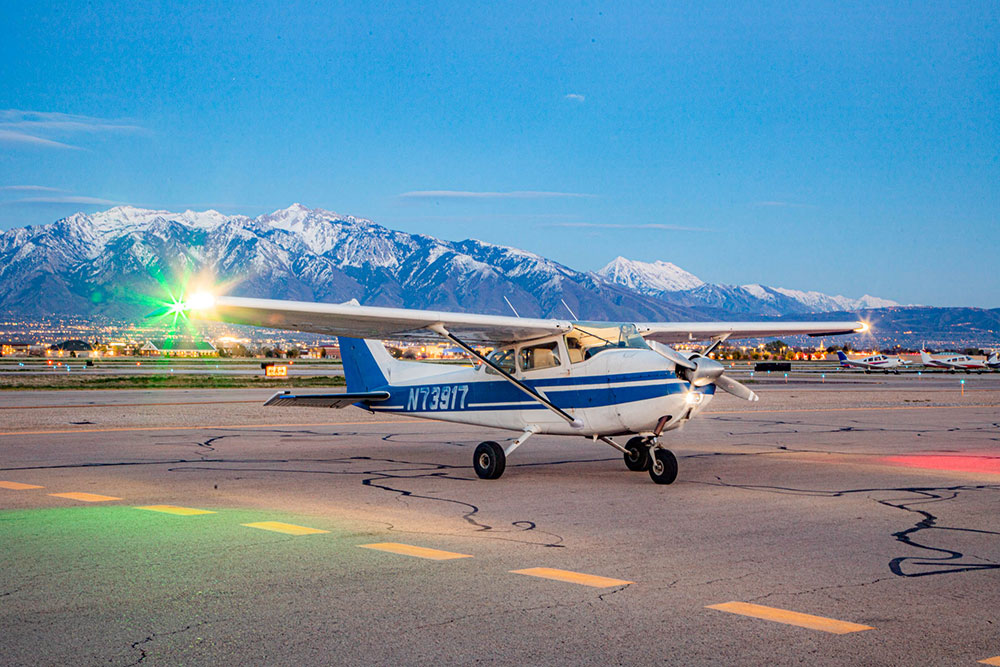
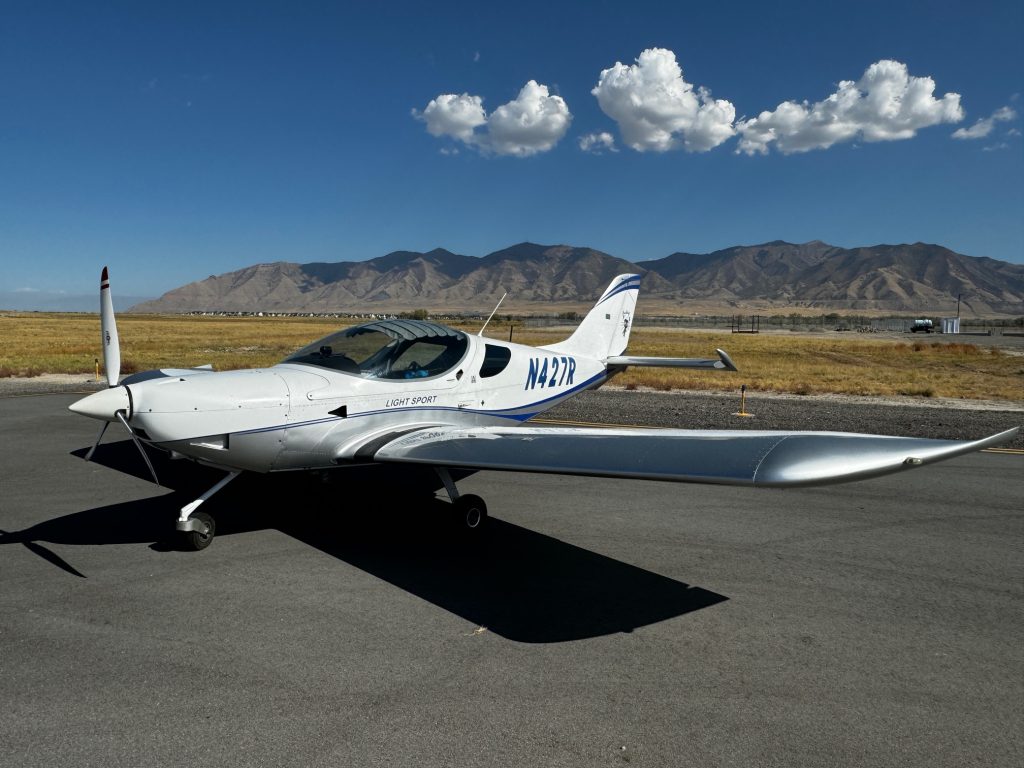
Choose from an unusually well equipped Spanish Fork lineup, starting with the 2010 Czech Sport Aircraft Sportcruiser – N427R and its full glass cockpit, autopilot, and XM radio. Glidepath Aviation makes aircraft rental at KSPK practical for student pilots, private pilots staying proficient, instrument candidates, and time builders working toward a commercial certificate. Pilots who want a high wing with modern glass can take the 1976 Cessna 172N – N73917, which carries dual G5s, a GNX 375 touchscreen GPS, a refreshed interior, and LED landing and taxi lights. Anyone planning serious instrument work should look at the fully IFR certified Piper PA-28-181 – N8401T with dual G5s, a Garmin GNX 375, and a GTR 205. Every airframe requires a CFI checkout and is supported by a team that treats safety, maintenance, and pilot support as the baseline.
Will need a checkout with a CFI.
Rent from one of the deepest and best equipped rental lines in Utah County, where glass panels, autopilot, and a twin on the field are all available to a renter rather than reserved for owners. Glidepath Aviation keeps the process at KSPK simple, from confirming your currency through checkout and into the left seat.
Here is how the process works, start to finish:
Spanish Fork, Utah sits in a genuinely good spot for a renter. Spanish Fork Airport (KSPK) is a non-towered general aviation field at roughly 4,500 feet in Utah County, with the Wasatch Range immediately east, Utah Lake to the northwest, and Spanish Fork Canyon opening to the southeast. You get quick access to mountain terrain, lake and valley practice areas, and long cross country routes in several directions, without competing against airline traffic or waiting on a release before every departure.
Rental requirements follow what the FAA already asks of you, so arrive with your paperwork in order. Bring a certificate appropriate to the aircraft and the flight, a valid medical or BasicMed qualification, a flight review completed within the preceding 24 calendar months, and three takeoffs and landings inside the preceding 90 days in the same category and class if you intend to carry passengers. Instrument flight requires instrument privileges plus recent instrument experience or a completed instrument proficiency check, and multi engine operations require the appropriate class rating. Light sport aircraft carry their own privilege and currency considerations. Every airframe here requires a CFI checkout regardless of your total time, and glass panels are a real reason for that rather than a formality, since a G5 and GNX 375 installation rewards familiarity before you fly it single pilot. Settle renter insurance and your deductible before the flight rather than after a claim.
Wind and altitude are the two things that will shape your day at Spanish Fork. The canyon to the southeast is well known for channeling strong wind through the area, which produces mechanical turbulence, gusty crosswinds, and conditions that can deteriorate faster than a forecast suggests, so check current observations rather than relying on a morning briefing alone. A field at roughly 4,500 feet means density altitude on a warm afternoon can pass 8,000 feet, lengthening the takeoff roll and flattening climb performance at exactly the moment you want it for terrain to the east. Run real performance numbers for actual temperature and weight, schedule mountain flying early when air is cooler and wind is calmer, and treat afternoon thermals as expected rather than surprising. Salt Lake City’s Class B airspace lies to the north and requires attention on the chart along with current TFRs and NOTAMs. Winter adds snow, ice, valley inversions, and preheat considerations, so ask about hangar and tie down procedures for any overnight away from base.
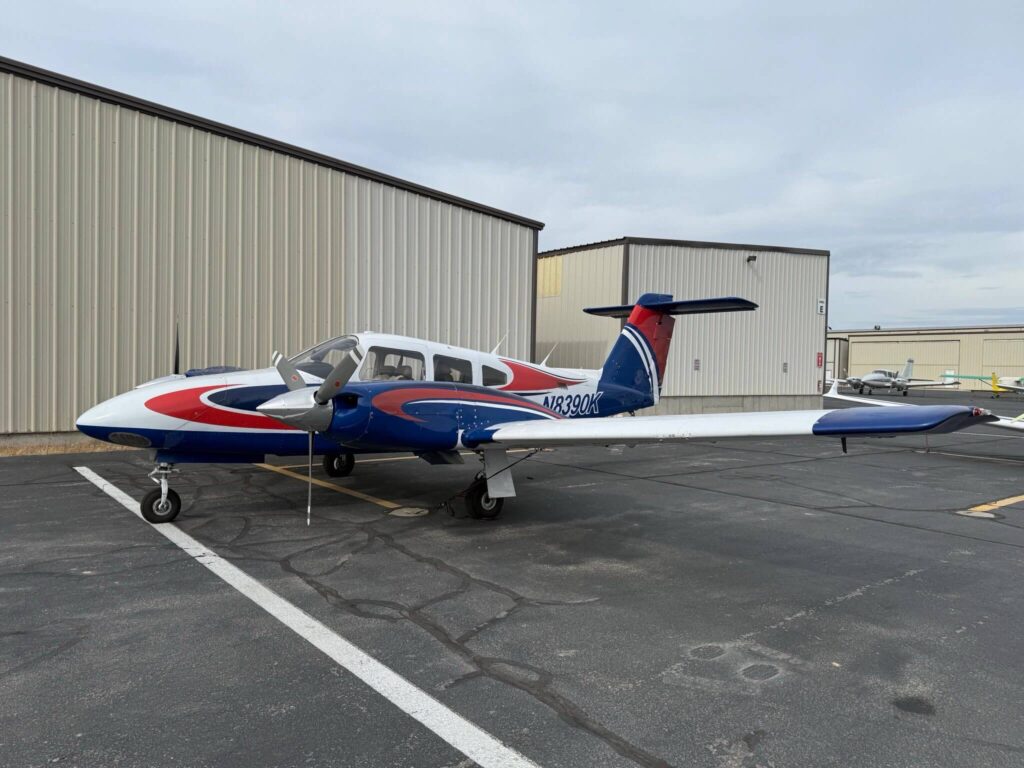
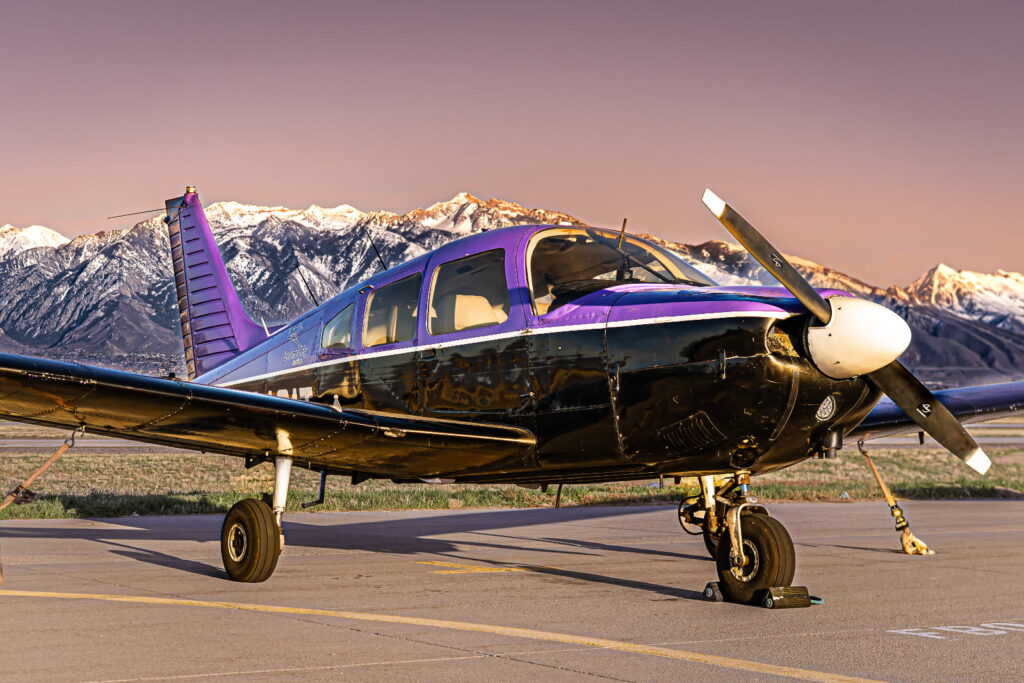
The line at KSPK is broad. It includes a 2010 Czech Sport Aircraft Sportcruiser with a full glass cockpit and autopilot, a 1976 Cessna 172N updated with dual G5s and a GNX 375, a fully IFR certified Piper PA-28-181 Archer with dual G5s and a GNX 375, and a turbocharged Piper PA-44-180T Seminole for multi engine work. Glidepath Aviation also lists a Cherokee 6 among available airframes. Confirm current availability for your dates.
Yes, and that is what makes this field notable. N8390K is a 1981 Piper PA-44-180T, a turbocharged Seminole, and having a twin available to renters at a general aviation field is genuinely uncommon. You need a multi engine class rating to act as pilot in command, or you can work toward it with an instructor. Turbocharging is a meaningful advantage in Utah, where naturally aspirated twins lose performance quickly with altitude and temperature.
Better than most rental fleets of comparable age. The Sportcruiser has a full glass cockpit with autopilot and XM radio. The 1976 Cessna 172N carries dual Garmin G5 displays and a GNX 375 touchscreen GPS with Bluetooth capability, plus LED landing and taxi lights and a refreshed interior. The Archer is fully IFR certified with dual G5s, a Garmin GNX 375, and a Garmin GTR 205. Confirm the exact panel on the specific tail number you reserve.
N8401T, the Piper PA-28-181, is the natural choice since it is fully IFR certified and the dual G5 and GNX 375 combination gives you a modern approach environment to train in. The 172N with the same GNX 375 is also a capable platform depending on its certification status. You will need instrument privileges plus recent experience or an instrument proficiency check to act as pilot in command under IFR, so plan your currency alongside your booking.
Yes, and here it earns its keep. Every airframe requires a checkout with a certificated flight instructor regardless of your total time. With glass panels, an autopilot, a light sport airframe, and a turbocharged twin all on the same line, the differences between these aircraft are substantial. The checkout covers the panel, power and system management, handling characteristics, and local procedures at KSPK. Expect the Seminole checkout in particular to take longer than a single engine transition.
No. Spanish Fork Airport is non-towered, so you self announce on the common traffic advisory frequency rather than working with a controller. Standard non-towered procedures apply: monitor and announce, fly a predictable pattern, keep an active scan, and expect aircraft without radios. The tradeoff is efficiency, since there is no clearance delay and no sequencing behind airline traffic, which makes the field productive for pattern work and proficiency flying.
Enough to plan around rather than react to. Spanish Fork Canyon channels wind through the area and can produce strong gusty conditions, significant crosswind components, and mechanical turbulence, sometimes building faster than a morning forecast implied. Check current observations before you launch and again before you return, know your personal crosswind limit and the aircraft’s demonstrated value, and be genuinely willing to cancel or divert. A light sport airframe in particular deserves conservative wind limits.
Rates vary by airframe, and a turbocharged twin costs considerably more per hour than a light sport aircraft or a 172, so ask Glidepath Aviation for current pricing on the specific tail number you want. Rentals are generally priced dry, meaning fuel is billed separately from the hourly rate. Buying block hours in advance lowers your effective rate as the block size grows, which is worth considering if you are working through a rating rather than flying occasionally.